
How Do Solar Panels Work? A Beginner’s Guide (2026)
How Do Solar Panels Work? A Beginner’s Guide
With electricity costs rising every year, more homeowners and businesses are switching to solar energy. But one question remains common:
How do solar panels actually work?
If you’re new to solar, don’t worry. This beginner-friendly guide explains the complete process in simple language, so you can understand how sunlight becomes electricity for your home.
What Is a Solar Panel?
A solar panel is a device that converts sunlight into electricity using photovoltaic (PV) cells.
These cells are made from semiconductor materials (usually silicon). When sunlight falls on them, they generate an electric current that can be used to power your home or business.
Think of a solar panel as a small power plant installed on your rooftop.
How Do Solar Panels Generate Electricity?
The process is simpler than most people think.
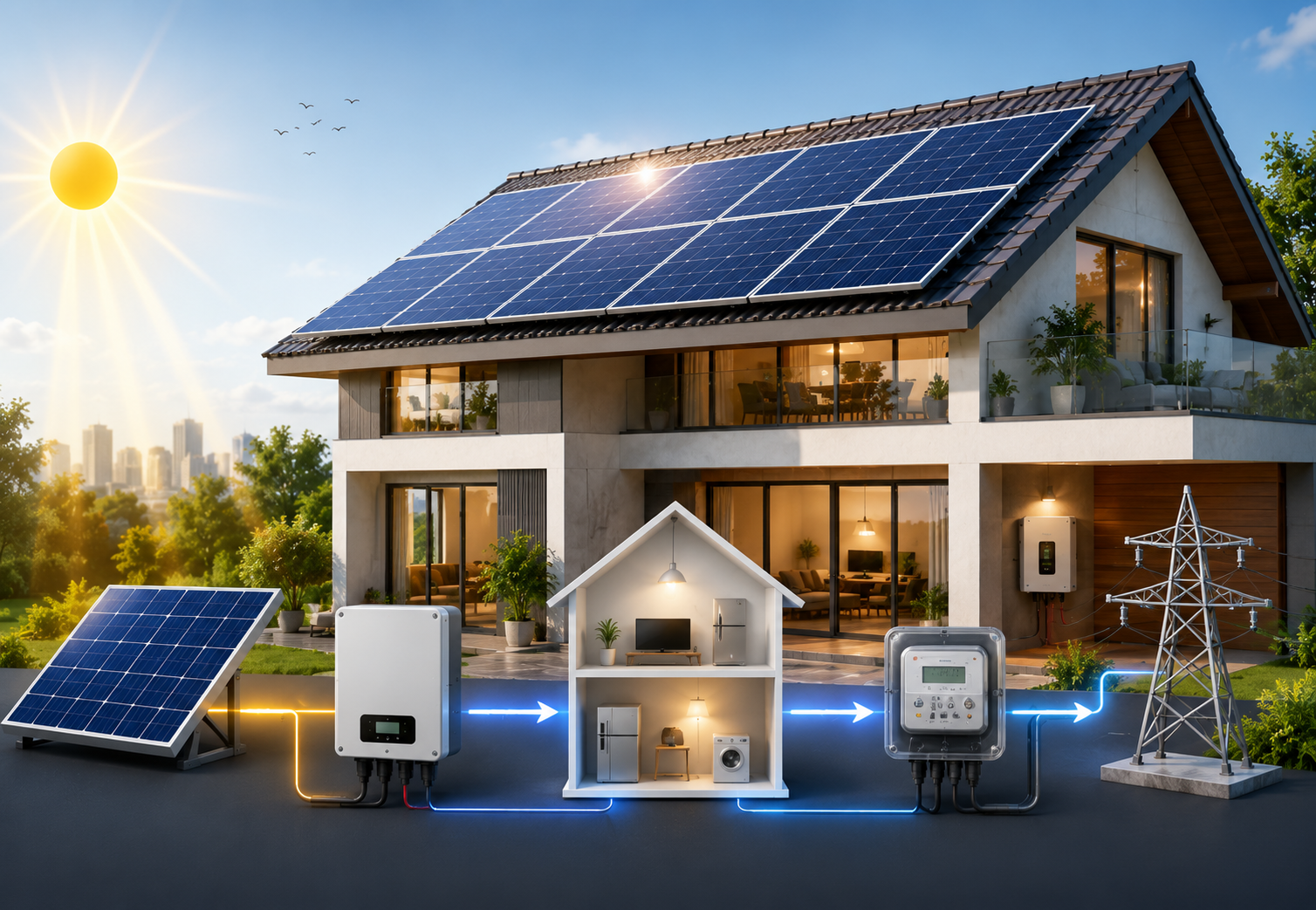
Step 1: Sunlight Hits the Solar Panels ☀️
Solar panels absorb sunlight throughout the day.
The photons (light particles) from the sun strike the photovoltaic cells, creating an electric charge.
This process is known as the Photovoltaic Effect.
Step 2: DC Electricity Is Produced ⚡
The electricity generated by solar panels is called Direct Current (DC).
However, household appliances cannot run on DC electricity.
That’s where the inverter comes in.
Step 3: Solar Inverter Converts DC to AC
A Solar Inverter converts Direct Current (DC) into Alternating Current (AC).
AC electricity powers almost everything inside your home, including:
- Fans
- Air Conditioners
- Televisions
- Refrigerators
- Washing Machines
- Lights
- Computers
The inverter is often referred to as the “brain” of the solar system because it manages power conversion and system performance.
Step 4: Electricity Powers Your Home
Once converted into AC electricity, the power flows through your home’s electrical distribution board.
Your home automatically starts using solar energy first.
If your solar system is producing enough electricity, your appliances run directly on solar power.
Step 5: Extra Electricity Goes to the Grid
Sometimes your solar panels generate more electricity than your home consumes.
Instead of wasting that energy, the excess power is sent to the electricity grid through Net Metering.
Your electricity meter records both:
- Electricity consumed from the grid
- Extra electricity exported to the grid
This helps reduce your electricity bill.
What Is Net Metering?
Net Metering is a billing system that allows homeowners to send surplus solar electricity back to the electricity grid.
During the daytime:
- Solar powers your home.
- Extra electricity is exported.
At night or during low solar generation:
- Your home uses electricity from the grid.
This system helps maximize savings and improve the return on your solar investment.
Main Components of a Rooftop Solar System
A rooftop solar system includes several important components.
Solar Panels
Capture sunlight and generate electricity.
Solar Inverter
Converts DC electricity into AC electricity.
Mounting Structure
Supports the solar panels securely on your rooftop.
It is designed to withstand different weather conditions, including heavy rain and strong winds.
Distribution Board
Safely distributes electricity throughout your home.
Net Meter
Measures imported and exported electricity.
Wiring & Safety Equipment
Includes cables, breakers, surge protection devices, and earthing systems to ensure safe operation.
Do Solar Panels Work on Cloudy Days?
Yes.
Solar panels generate electricity from daylight, not just direct sunlight.
Although production is lower on cloudy days, the system continues generating electricity.
This is why solar remains effective even during the monsoon season.
Do Solar Panels Work During Rain?
Yes.
Rain does not stop solar panels from working.
They continue producing electricity using available daylight.
An added advantage is that rainfall naturally washes away dust and dirt, helping keep the panels cleaner.
What Happens at Night?
Solar panels need sunlight to generate electricity.
At night:
- On-Grid systems use electricity from the grid.
- Hybrid systems use stored battery power first (if batteries are installed).
- Off-Grid systems rely on battery storage.
Benefits of Installing Solar Panels
Up to 80% Savings on Electricity Bills
Generate your own electricity and reduce monthly energy costs.
Government Subsidy
Eligible residential homeowners can receive financial assistance under the PM Surya Ghar: Muft Bijli Yojana, subject to applicable government guidelines.
25-Year Performance Warranty
Quality solar panels are designed to deliver reliable performance for decades.
Environment-Friendly Energy
Solar energy produces clean electricity without harmful emissions.
Increased Property Value
Homes with rooftop solar systems are often more attractive to buyers because of lower operating costs.
Why Choose Tata Power SolarRoof?
Choosing a trusted solar brand ensures better performance, reliability, and long-term peace of mind.
With Tata Power SolarRoof, you get:
- High-quality solar panels
- Advanced inverter technology
- Professional installation
- Strong after-sales support
- Reliable performance across different weather conditions
Why Choose KG Insolation Pvt. Ltd.?
KG Insolation Pvt. Ltd. is an Authorized Tata Power SolarRoof Channel Partner, offering complete rooftop solar solutions for homes, businesses, schools, and commercial properties.
Our services include:
- Free Site Survey
- Customized Solar Design
- Residential Solar Installation
- Commercial Solar Solutions
- Government Subsidy Assistance
- Net Metering Support
- Professional Installation
- After-Sales Service & Maintenance
Whether you’re planning a 3 kW, 5 kW, or larger rooftop solar system, our experienced team helps you choose the right solution based on your energy needs and budget.
Frequently Asked Questions
How long do solar panels last?
Most high-quality solar panels come with a 25-year performance warranty and can continue generating electricity beyond that with proper maintenance.
Can solar panels run an air conditioner?
Yes. A properly sized solar system can power air conditioners along with other household appliances.
Is rooftop solar safe?
Yes. Professionally installed rooftop solar systems include safety features such as earthing, surge protection, and circuit breakers.
Do solar panels require regular maintenance?
Solar panels require very little maintenance. Periodic cleaning and routine inspections are generally enough to maintain optimal performance.
Is solar worth it in India?
Yes. With abundant sunshine, rising electricity costs, and available government incentives, solar is one of the smartest long-term investments for homeowners and businesses.
Conclusion
Solar panels transform sunlight into usable electricity through a simple yet powerful process involving photovoltaic cells, an inverter, and your home’s electrical system. Once installed, they help reduce electricity bills, lower dependence on the grid, and contribute to a cleaner environment.
If you’re planning to install a rooftop solar system, choosing a trusted installation partner is essential. With Tata Power SolarRoof and the expertise of KG Insolation Pvt. Ltd., you can enjoy reliable performance, long-term savings, and professional support from consultation to installation.